Shift Sensor

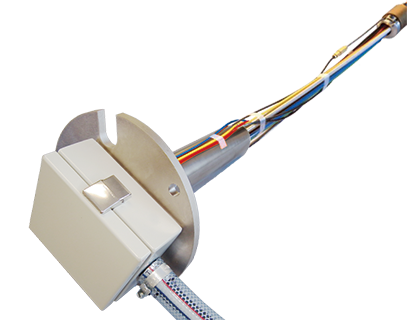
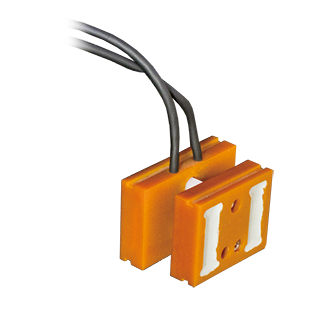
Shift Sensor KUH-A
X direction: ±3mm Z direction: +3mm

This sensor measures the amount of displacement by capturing the behavior of the joint between the front-placed concrete and the back-placed concrete of a concrete structure. 
Non-contact measurement between two points allows measurement without affecting the behavior of the joints. 
The sensor is compact, lightweight, and easy to handle. It can measure not only displacement in the shear direction (X direction), but also in the direction where the boundary surface delaminates (Z direction) due to cracks or other phenomena. 
Furthermore, it can be applied to concrete and steel surfaces (but not magnetized) as well as buried surfaces. 
This product was jointly developed with the Structural Maintenance Research Center, National Research Institute of Civil Engineering. 

Protection ratings: IP68 equivalent 
 

Shift Sensor KUH-A
Features
  • Non-contact measurement between two points, no influence on the behavior of the joint (boundary surface) 
  • Compact and lightweight 
  • Capable of measurement in both X and Z directions 
  • High response and dynamic measurement 
  • Can be used with general-purpose data loggers 
  • Waterproof construction
  • Specificatioins

    Type KUH-3A
    Capacity X : ±3mm Z : +3mm
    Rated output X : approx. 3.0mV/V(approx. 6000×10-6 strain) 
    Z : approx. 1.1mV/V(approx. 2200×10-6 strain)
    Non-linearity X : 2%RO  Z : 4%RO
    Temperature range -10 to +60℃(No icing)
    Weight approx. 20g
Continuous Tube Displacement Transducer

Continuous Tube Displacement Transducer KWL-E 100mm

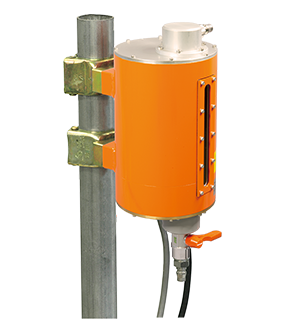
This displacement transducer measures the vertical displacement of civil engineering structures such as bridges. It is connected to a reference water tank at an immovable point by a connecting pipe, and measures the displacement with respect to the water surface in the tank. 
Inside the displacement transducer is a detector that constantly detects and tracks the water surface using a servo mechanism, and a circuit that electrically converts the amount of movement of the detector. 
The displacement of the structure is measured as the relative displacement of the reference water surface to the displacement transducer. 
Our data logger is used for measurement, allowing automatic measurement of multiple points. 
A servo mechanism is used to detect the reference water surface, and the circuit stability has been further improved to ensure stable measurement over a long period of time. (Built-in arrester) 

Protection class IP 54 or equivalent

Continuous Tube Displacement Transducer KWL-E
Features
  • Excellent temperature stability 
  • Drip-proof construction 
  • Automatic measurement
  • Specifications

    Type Capacity Rated output Non-linearity Allowable temperature range
    KWL-100E 100mm Approx.1mV/V (2000×10-6strain) 0.5%RO 0 to +50℃ 
    (excluding icing)

Bedrock Displacement Transducer

Bedrock Displacement Transducer KLB-B 100mm (-20 to +80mm) 

The KLB-B bedrock displacement transducer measures the amount of displacement between the mounting surface and a measuring point in bedrock. 
The KLB-B consists of a bedrock displacement transducer KLB-B, a hydraulic anchor (KLF-11/12), and a connecting rod (KLF-21). The KLB-B is equipped with up to 8 displacement transducers, so that 8 hydraulic anchors can be fixed in one borehole (φ66 mm or more for 1 to 6 points, φ86 mm or more for 7 or 8 points) for measurement. The amount of displacement between the displacement transducer and anchor is detected as relative displacement through the rod. 
The anchors are anchored to the bedrock by applying water pressure to the anchors at predetermined measuring points in the borehole using a pump from the ground. 

Protection class IP 68 or equivalent

Bedrock Displacement Transducer KLB-B
Features
  • Remote measurement is possible 
  • Capable of measuring up to 8 levels of rock displacement 
  • Specifications

    Type No. of measurement Capacity Rated output Non-linearity Temperature range
    KLB-100B-○ 1 to 8 100mm
    (-20 to +80mm)
    Approx.2.5mV/V
    (5000×10-6strain)
    0.5%RO 0 to +60℃ 
    (no incing)

    * “◯” under “Type” corresponds to the number of measurements, 1 to 8.

    Type Input/Output Resistance
    KLB-100B-1 350Ω
    KLB-100B-2 350Ω
    KLB-100B-3 350Ω
    KLB-100B-4 Input resistance 175Ω 
    Output resistance 350Ω
    KLB-100B-5 Measurement points1 to 4 Input resistance 175Ω 
    Output resistance 350Ω
    Measurement points5 Input/output resistance 350Ω
    KLB-100B-6 Input resistance 175Ω 
    Output resistance 350Ω 
    KLB-100B-7 Measurement points1 to 6 Input resistance 175Ω 
    Output resistance 350Ω 
    Measurement points7 Input/output resistance 350Ω
    KLB-100B-8 Input resistance 175Ω 
    Output resistance 350Ω 

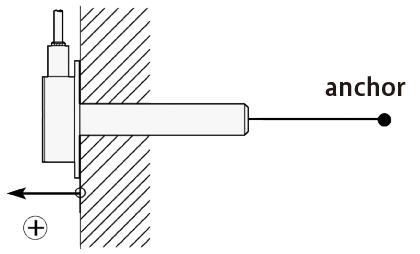
    Output polarity

    img-trout-13

    Measurements move in the positive direction with respect to the direction in which the distance between the “rock displacement transducer” and the “water hydraulic anchor” opens

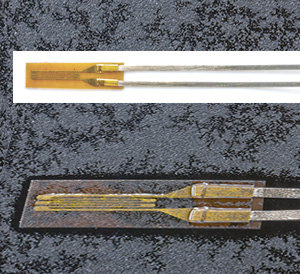
HZF series High temperature use strain gauge

HZF series High temperature use strain gauge

This is an adhesive bonded high-temperature strain gage capable of measuring temperatures up to 35 
The lead wires are welded together, making the gauge RoHS compliant. 

HZF series High temperature use strain gauge
Applicable specimen Metal
Operational temperature -196 to +350℃
Temperature compensation range +10 to +300℃
Applicable adhesive C-1, NP-50
Backing Polyimide
Element Ni-Cr
Strain limit 1%(10000×10-6 strain) 
Fatigue life at room temperature 1×10⁶(±1500×10-6 strain)
  • Single-elementCE

    Gauge pattern Type Gauge length 
    (mm)
    Gauge width
    (mm)
    Backing length
    (mm)
    Backing width
    (mm)
    Resistance
    (Ω)
     img-hzfla-2 HZFLA-2-11
    HZFLA-2-17
    HZFLA-2-23
    2 0.5 5.4 1.4 120

    *Each package contains 10 gauges 
    *Self-temperature compensating gauges for target materials with linear expansion coefficients other than 11×10-6/℃ can also be manufactured. (made-to-order) 
    Material examples: stainless steel, aluminum alloy 

    Point: 
    C-1 adhesives can be used up to 350°C for one short cycle.  
    For long-term or repeated measurements, please consult with the sales representative in charge.